

January 14, 2021 //
3:40 pm
From cookers to Netflix. We rely on electricity for so much in our lives. Yet, it’s not something we think of much, we tend to take it for granted. That is until something goes wrong (or we need something new installed).
When that happens, it’s time to find an electrician.
But, how much does it cost to hire an electrician for your home?
In this blog, we’ll look at how much an electrician costs in Scotland, and what factors can affect the price.
What is the hourly rate of an electrician?
Most electricians charge for jobs based on a call out fee and an hourly rate. For larger jobs they may offer a day rate or a quote.
Across the UK, the average hourly rate for an electrician may vary, but we’ve found that it’s usually somewhere between £30-£45+VAT/hour.
At Cerretti, our call out fee is £30+ VAT per hour, which includes the first hour on the job. If you need us on an evening or a weekend, this will increase to £60 + VAT, with the normal hourly rate thereafter.
Our hourly rate is usually £30-£35 + VAT, depending on the level of electrical certification required. For example, a full housing rewire would require a higher level of certification and would therefore be slightly more expensive.
If the hourly rate is for specialised commercial or industrial work, then again this can affect the price and would usually be somewhere between £40-£45+VAT/hour.
It’s good practice to ask your electrician to break down the costs, so you understand what you are paying and what for.
So, that gives you an idea of roughly how much you can be expected to pay for an electrician. However there are a few factors that can affect the overall price you will end up paying:
- What type of electrical work needs to be done?
- How easy is it to access?
- Where do you live?
- What electrician you use…
#1 What type of electrical work needs to be done?
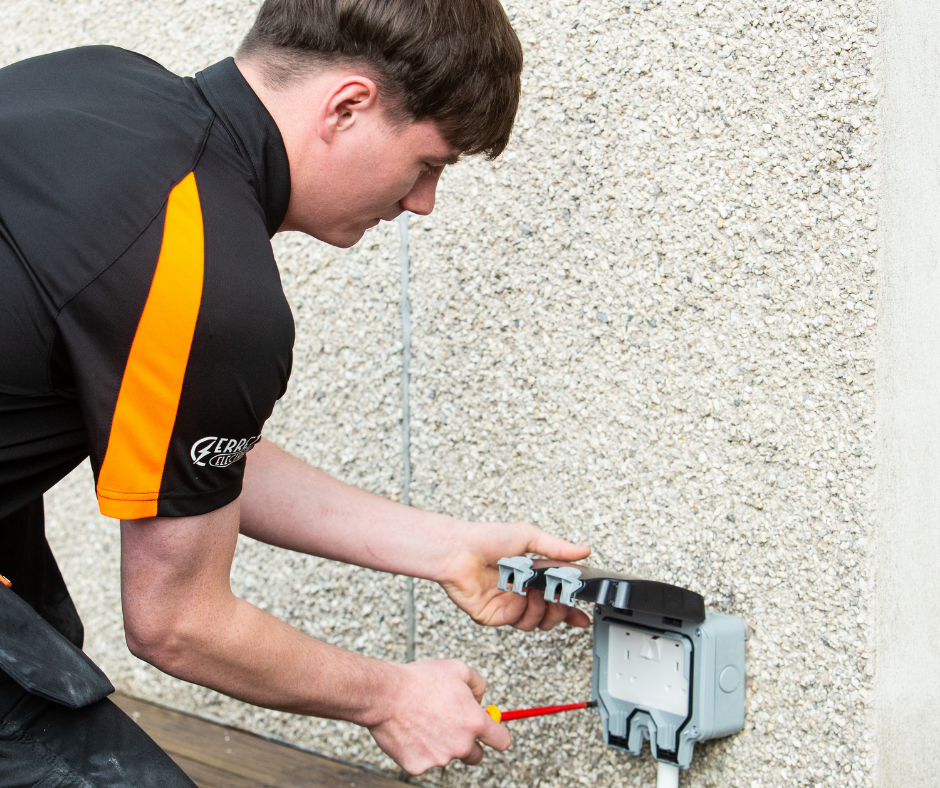
To be able to accurately price your job it’s essential to understand a little more about what needs to be done, and to do this we need to see the job. You know the typical hourly rates, but, of course, some jobs will take longer than complete – which will affect the overall price.
These are some approximate costs for some of the more common jobs that we get asked to do. Please note, these are approximate prices, and it’s still essential to see the job in order to give an accurate estimate. But this will give you some guidance on how much you may be expected to pay for common jobs.
Light fitting: £30+VAT plus the time charged per hour.
Socket: £10-£15+ VAT, plus the time charged per hour.
Smoke/heating alarm: £50+ VAT supply and fit (lithium will be dearer).
The hourly rate charged will usually depend on the electrician, plus the level of electrical certification required for that particular job. For example, a full housing rewire would require a higher level of certification and would therefore be slightly more expensive than something like installing a light fitting.
#2 Ease of access
Is your job in a hard to reach area?
Another reason it’s important to know exactly what the job entails, is because the ease of access can affect the total price.
Things like PAT tests, light fittings and sockets will likely be easy enough. But if the job involves us crawling about tight access space, in lofts or under floors, then it’s likely that the job will take longer, and may require more people.
It’s not usually a problem, and doesn’t stop the job getting done. But it will likely increase the total cost of the job, so is worth bearing in mind.
Related Content – How to Choose an Electrician?
#3 Where you live…
In general, where you live in the UK will affect how much your hourly rate is, with London and the South East more expensive than other parts of the country.
But on a more micro-scale, how far you are from your “local” electrician can also affect the final cost. Most electricians will charge a set rate for jobs within a certain distance of their premises. If you want work done out with that area then it may be possible, but it will likely incur an additional charge. This is to ensure that the costs of the additional mileage and time are covered within the costs.
For example, we are based in Gourdon and cover anywhere between Aberdeen and Dundee, and as far west as Banchory and Glamis. But for certain projects we will be willing to travel out with these areas, however additional costs may be applicable.
That’s why it’s always worth searching for a local electrician, to ensure you are not paying more than you have to be.
#4 What electrician you use…
Did you know that the term electrician is not protected in Scotland?
This means that anyone in Scotland can call themselves an electrician and carry out electrical work – even if they don’t hold qualifications to do so.
Training to be a Qualified Electrician usually takes between 2-4 years, and it’s recommended that you undertake continual training to keep up with any new regulations. This training takes time (and comes with experience and an increased quality in work), so it makes sense that qualified electricians (like ourselves) will usually charge a little more than those who are operating as “electricians” without any qualifications.
At Cerretti, all our electricians have served their time and trained up to 18th edition which is the British Standards BS 7671:2018 requirements for Electrical Installations, IET Wiring Regulations. In addition we do yearly checks to ensure that our regulations are up to date, with specialist staff carrying a CompEx card. Plus our work is independently assessed each year by NICEIC.
We’d recommend for your safety, and peace of mind that you pay for a qualified electrician to carry out any work in your home.
The cost of not using a qualified electrician
When we think about cost, we usually think about it in financial terms. But in our opinion the cost of not using a qualified electrician to undertake your electrical work is much more than a financial consideration.
Firstly, there’s the quality. As we said, qualified electricians undergo years of training before qualifying, then usually keep up to date with the current regulations. With this comes understanding and experience that non-qualified electricians don’t have. In our opinion, it’s worth hiring a quality electrician to ensure your work is carried out to a high quality, is in line with the current regulations, and most importantly is safe.
Now we don’t want to get all scaremonger-y here. But if electrical work is not undertaken by a qualified electrician it can be highly dangerous. In fact, the majority of all recorded accidental house fires in Scotland were of an electrical origin. Plus, poor workmanship can cause electric shocks or an annoying power outage.

So, ensuring the safety of your electrical work is no small matter.
The best way to minimise the risk of your electrical installations is to make sure that any electrical work is carried out by a qualified electrician. It’s not good enough to get someone that kind of knows what they are doing. But someone that has carried out training, and is up to date on the regulations.
It might be a little more expensive, but in our opinions it’s a cost that is totally worth it for the peace of mind that you will get from it.
Related Content – Why Choose an NIC EIC Approved Electrician?
Summary: How much does an electrician cost?
So, how much does an electrician cost?
Well, like most things that will depend. It will depend on what the job is, where it is and who you get to carry out the work.
But most jobs by a qualified electrician will be somewhere around the £30-£35+VAT per hour mark, with variations for commercial work.
If you are needing any electrical work done then please don’t hesitate to get in touch and we will be able to give you a quote.
This articles prices are correct as of 2021
back to all blogs