

October 21, 2026 //
6:38 pm
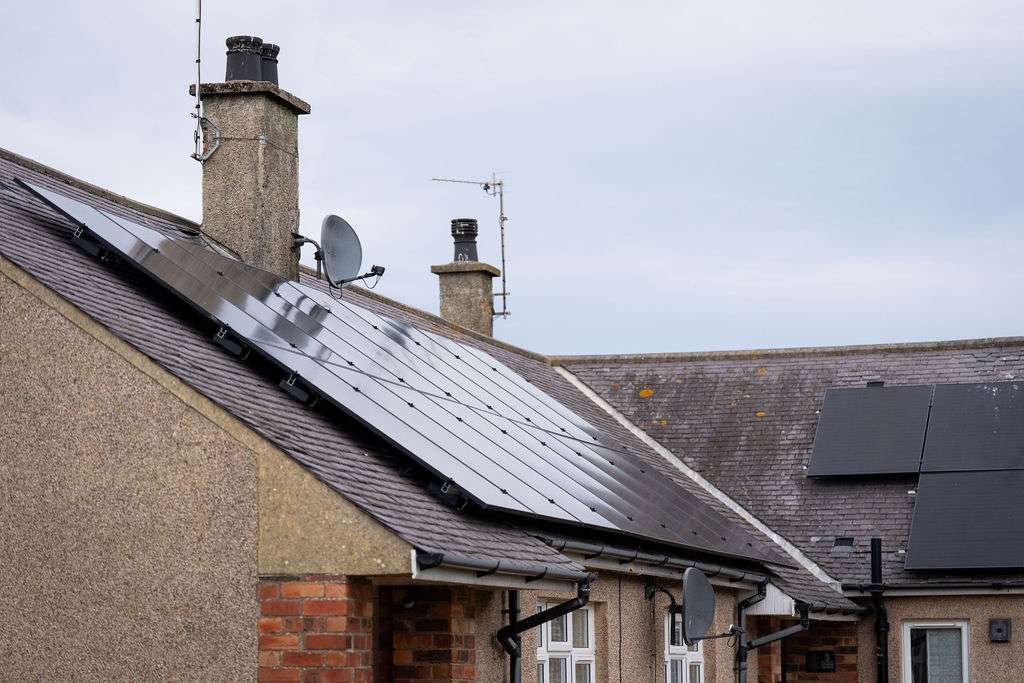
Commercial solar panels can provide significant long-term savings to businesses, but there’s no denying that they are also a considerable investment.
Depending on your circumstances, you may be able to apply for funding, spread the cost through asset finance or receive tax relief through capital allowances. Some companies may also be eligible for grants.
In this blog, we’ll explain the main options that may be available to your business, helping you to make a more informed decision and showing that commercial solar can be much more achievable than you might think.
Could your business claim Capital Allowances?
Capital allowances are a form of tax relief that helps your business to deduct some or all of your investments (as long as they qualify) from your taxable profits.
According to HMRC, solar panels are classed as a special rate plant and machinery. This means that they qualify for capital allowances, although the amount and type of relief available will depend on your business, tax position and how the solar system is purchased.
The allowances that may be relevant include:
Annual investment allowance (AIA)
This allows most businesses to deduct up to £1 million of qualifying expenditure from their taxable profits during the year it was purchased. It’s important to note that this is not a £1 million payment or grant; it simply means that the expenditure can be deducted before your tax liability is calculated.
Special rate first year allowance
Some companies may also be able to claim a 50% first year allowance on new and unused special rate equipment, which can include solar panels. This may be relevant if the AIA has already been used or is unavailable.
Writing down allowance (WDA)
Any remaining expenditure that hasn’t received tax relief in the above two allowances can be added to a special tax pool. This is currently written down at a rate of 6% each year on a reducing balance basis.
Tax relief depends on a lot of factors, so it’s worth speaking to your accountant about any capital allowances before including them in your projections.
Asset Finance
Asset finance can help your business to spread the cost of your new solar system through regular payments, rather than having to make one large payment upfront.
This could help you to protect your available cash for other areas of the business. However, interest and fees will increase the overall cost you will be borrowing and all finance is subject to the lender’s terms and conditions.
Some lenders offer Green Asset Finance specifically for renewable energy equipment; for example, Lloyds Bank and Bank of Scotland both offer a discount of 0.25% for SMEs. The available rates, deposits and repayment periods will vary, so it’s important to compare your options and do a bit of research.
Hire Purchase
Hire purchase is a common type of asset finance. A finance provider purchases the system and your business makes regular payments over an agreed period.
Once all agreed payments are made and any final purchase fee has been paid, your business normally takes ownership of the system. However, this equipment may still be eligible for capital allowance once it’s brought into use.
Leasing
Leasing helps your business to use a solar panel system in return for regular payments over an agreed amount of time.
Depending on the agreement, your business may be able to continue renting, return the system or explore other options at the end of the term. Before entering into a lease, it’s important to check the following:
- Who is responsible for maintenance?
- What happens when the agreement ends?
- Will your business ever own the system?
- What happens if you move or sell the premises?
As the lender normally owns the leased solar panels, the tax often differs from an outright purchase or hire purchase agreement.
Power Purchase Agreement (PPA)
This is another potential way to access a solar panel system without purchasing the system outright.
PPAs are normally long-term agreements where a funding provider installs and owns the solar panel system, while your business provides the roof space or land to install them. You can then purchase the electricity generated at an agreed rate, usually lower than electricity purchased from the grid.
Before signing, check how the electricity rate may change, who is responsible for maintenance and what happens if you sell or leave the premises.
Grants and funding support
Grants may occasionally be available for commercial and community renewable projects. However, funding opens and closes regularly and eligibility can depend on your location, business type and the type of solar system you have opted for.
Our customers at the Bettridge Centre received funding support from the Scottish Government’s Just Transition Fund fro their solar panel system. The fund supported projects across the North East and Moray that contributed to the region’s transition towards net zero.
Although this funding round is now closed, the project shows how grant support can help community organisations make renewable energy more achievable.
Currently, the CARES Community Buildings Fund can help to support non-profit organisations and charities in Scotland with renewable equipment such as solar panels and battery storage.
It’s always worth checking the latest eligibility criteria for funding in case there is something that might be suitable.
Which option is right for your business?
There is no single funding route that will suit every business. The right option will depend on your available capital, cash flow, tax position and whether you want to own the system.
When comparing your options, it’s worth considering the following:
- The initial amount your business needs to contribute
- The monthly payments and overall cost
- Who will own the system
- Who will be responsible for maintenance
- The length of the agreement
- Any potential tax relief
- What happens at the end of the agreement
The lowest monthly payment will not necessarily provide the best overall value, so make sure you understand the full agreement before making a decision.
Ready to get started?
At Cerretti Electrical, we can assess how your business uses electricity, recommend a suitable solar and battery system and provide the information you need to explore the available funding options.
You should always speak to an accountant or qualified financial adviser about tax relief and finance agreements, but our team can help you understand the solar system, installation cost and potential energy savings.
Get in touch to discuss whether commercial solar could be right for your business.
back to all blogs